Direct-from-factory procurement portfolio uniting state-of-the-art reverse-engineered personal care batches with pharmaceutical-grade emulsification, filling, and packaging systems.
In modern commercial personal care manufacturing, Reverse Cosmetic Engineering (commonly known as deformulation, chemical reconstruction, and benchmark deconvolution) has evolved from simple copycat formulation into a sophisticated discipline of analytical chemistry and physical rheology. Global beauty enterprises, venture-backed direct-to-consumer (DTC) brands, and institutional clinical labels face mounting commercial pressure to recreate market-leading benchmark aesthetics, sensory profiles, and active efficacy while navigating evolving international regulatory mandates, supply chain fragilities, and margin optimization requirements.
As China’s preeminent reverse cosmetic engineering manufacturing complex, our research facility and manufacturing plants bridge high-resolution analytical instrumentation with pharmaceutical-grade industrial production. A standard commercial reverse engineering project executes across three interdependent technical stages:
Utilizing Gas Chromatography-Mass Spectrometry (GC-MS), High-Performance Liquid Chromatography (HPLC), and Fourier-Transform Infrared Spectroscopy (FTIR) to separate, qualify, and quantify solvent carriers, surfactant architectures, preservation systems, and active peptides down to parts-per-million (ppm) thresholds.
Deconstructing physical attributes using rotational rheometers and texture analyzers. We quantify yield stress, shear-thinning indices, thixotropic recovery, and interfacial surface tension to replicate exact sensory pickups, cushion, playtime, and finish skin-feel.
Engineering replacement pathways for restricted silicones (D4/D5), ethoxylated emulsifiers (PEGs), synthetic preservatives (parabens, MIT), or unethically sourced botanicals, producing formulations that meet or exceed target benchmarks under MoCRA, EU 1223/2009, and ASEAN directives.
Understand the structural and chemical differences when commissioning benchmark deconstruction versus selecting off-the-shelf catalog formulas.
| Evaluation Parameter | Standard Catalog OEM | Reverse Cosmetic Engineering (Our Standard) | Procurement Advantage |
|---|---|---|---|
| Formula Differentiation | Pre-existing stock base with minor fragrance/color variance | 100% bespoke molecular architecture matching benchmark rheology | Avoids commodity brand parity; protects brand equity |
| Benchmark Fidelity | Approximated (60% - 75% sensory correlation) | Quantitatively matched (≥ 98.5% textural and active correlation) | Consumer blind trials yield identical preference ratings |
| Analytical Validation | Basic pH, viscosity, and microbiological testing | GC-MS, HPLC, Centrifuge stability, Freeze-thaw (-15°C to 45°C) | Zero phase separation or chemical breakdown across international shipping |
| Raw Material Traceability | Standard regional supply sourcing | Direct sourcing of USP/Ph. Eur. grade bio-actives & high-purity lipids | Full regulatory filing support (MoCRA, CPMS, INCI dossiers) |
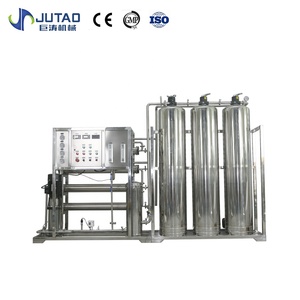
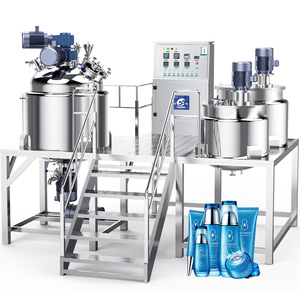
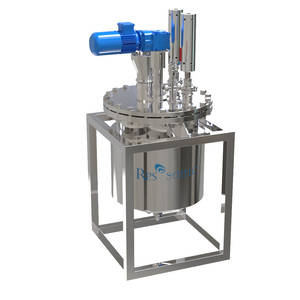
| Production Equipment | Standard atmospheric mixers | JUTAO RO systems, 316L vacuum reactors, ultrasonic cavitators | Eliminates micro-aeration; ensures sub-micron lipid dispersion |
How progressive personal care procurement officers and chemical formulators are managing cost structures, regulatory headwinds, and technological shifts.
Integration of predictive AI algorithms with mass spectrometry databases allows automated matching of chromatographic retention times, slashing reverse engineering formulation cycles from 8 weeks down to 10-14 days with zero active drop-off.
Global brands are replacing petroleum-derived emollients and animal squalane with precision-fermented biosurfactants, micro-algae lipids, and bio-identical recombinant collagen synthesized with lower carbon footprints and higher batch uniformity.
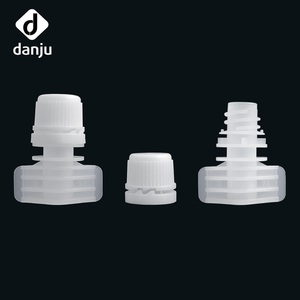
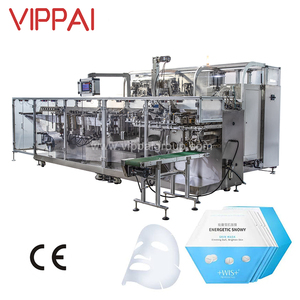
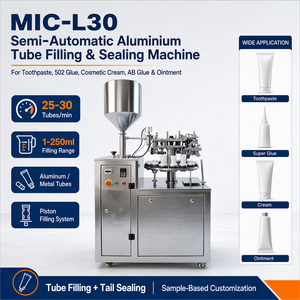
Procurement contracts increasingly integrate formula supply with customized high-efficiency machinery—such as high-speed automated pouch spout fitters, aluminum tube sealers, and ultrasonic homogenizers—eliminating third-party contract filler markup.
Combining high-capacity sanitary chemical engineering with verified international quality governance and responsive contract structures.
Our facility operates cleanrooms verified to Class 100,000 environmental standards. Equipped with multi-stage Reverse Osmosis EDI water filtration (< 0.1 μS/cm conductivity), zero microbial cross-contamination is assured throughout high-volume compounding.
Unlike trading brokers, we manufacture our own JUTAO-series vacuum homogenizers, 316L stainless steel jacketed mixing vessels, and high-precision tube filling machinery, guaranteeing turnkey operational integration between chemical formulations and production mechanics.
We furnish comprehensive Product Information Files (PIF), safety assessments by accredited toxicologists, IFRA compliance certificates for fragrance fractions, and mandatory MoCRA/CPNP cosmetic listing documentation for instant retail clearance.
Direct answers to the most critical technical, intellectual property, and logistical inquiries raised by international cosmetic procurement directors.
Our standard reverse engineering cycle requires 10 to 14 business days from physical receipt of your benchmark product sample. During this period, our analytical laboratory conducts chromatographic separation, active quantification, and initial benchtop batch reconstruction. Clients receive two to three iteration samples with full analytical match scorecards and rheology comparisons.
We enforce strict bilateral Non-Disclosure Agreements (NDAs). Reverse engineering of commercial off-the-shelf cosmetics is legally established worldwide, provided specific active substance patents are not infringed. Our in-house patent counsel audits benchmark ingredient lists to design bio-equivalent workarounds that circumvent active utility patents while duplicating texture, performance, and sensory skin-feel.
For bespoke reverse-engineered bulk emulsions, our MOQ begins at 50 kg to 100 kg for pilot commercial batches, accommodating dynamic startups. For finished, filled, and labeled consumer units (e.g., serum bottles, tubes, jars), MOQs generally start at 1,000 to 2,500 units per SKU depending on packaging complexity and whether custom injection molds are required.
Yes. Over 60% of our reverse engineering briefs involve clean substitution. We systematically replace controversial cyclic silicones (cyclopentasiloxane), parabens, phenoxyethanol, sulfates (SLS/SLES), phthalates, and synthetic PEGs with biodegradable sugar esters, natural polyglyceryl emulsifiers, fermentation-derived biosurfactants, and modern multi-functional preservation boosters (e.g., 1,2-Hexanediol, Ethylhexylglycerin).
Every reverse-engineered formulation undergoes rigorous 3-month accelerated stability testing (incubators held at 4°C, 25°C, 45°C, and 50°C at 75% relative humidity), three cycles of freeze-thaw thermal shock (-15°C to +45°C), high-speed centrifugation (3,000 rpm for 30 minutes to evaluate emulsion stability), and USP 51 / ISO 11930 Antimicrobial Preservative Efficacy Testing (PET).
Yes. Our dual industrial status enables us to provide both cosmetic formulation batches and CE-certified manufacturing equipment. We export complete turnkey production suites—including JUTAO vacuum homogenizing mixers, reverse osmosis water purification rigs, rotary pouch filling machines, and automatic aluminum tube crimpers—complete with on-site technician installation, commissioning, and operational training.