Explore commercial liquid lines, certified batch homogenizers, and turnkey formulation machinery engineered for agile OEM/ODM manufacturing scale.
In modern high-speed cosmetic, chemical, and personal care packaging, liquid filling is fundamentally an exercise in fluid rheology, mechanical dosing tolerances, and micro-contamination prevention. Sourcing teams seeking contract manufacturing suppliers must navigate far beyond simple volumetric displacement. The interaction between formulation shear rates, ambient thermodynamic viscosity fluctuations, container geometry, and nozzle cutoff mechanics defines production line efficiency, fill accuracy (CPK targets), and finished product integrity.
Operational Benchmark: Our Miami manufacturing plant utilizes closed-loop 316L pharmaceutical-grade stainless steel piping paired with CIP (Clean-In-Place) and SIP (Steam-In-Place) automated steam sanitization cycles, achieving microbial counts below 10 CFU/g across water-thin hydro-alcoholic solutions, non-Newtonian shear-thinning lotions, and thixotropic anhydrous scrubs.
When engineering high-throughput liquid packaging lines, four primary dispensing architectures govern overall equipment effectiveness (OEE):
| Filling Technology | Viscosity Range (cP) | Dosing Accuracy | Ideal Liquid Typology | Key Operational Benefit |
|---|---|---|---|---|
| Servo-Piston Volumetric | 1,000 – 125,000 cP | ±0.25% to ±0.5% | Heavy Creams, Clays, Gels, Hair Masks | Zero cavitation with viscous, shear-sensitive fluids |
| Coriolis Mass Flow Meter | 1 – 25,000 cP | ±0.10% by mass | Serums, Active Solutions, Essential Oils | Eliminates physical piston contact; direct gram-weight calibration |
| Positive Displacement Peristaltic | 0.5 – 5,000 cP | ±0.50% | Sterile Cosmeceuticals, Peptides, Toners | Single-use disposable paths; zero risk of cross-batch contamination |
| Vacuum Level & Gravity Monoblock | 0.1 – 250 cP | Cosmetic Level Line | Perfumes, Body Mists, Setting Sprays | Uniform liquid meniscus line in clear glass retail packaging |
Precision liquid filling requires dynamic bottom-up diving nozzles equipped with positive blow-off cutoffs to eliminate stringing, aeration, and bubbling. Aerated liquids result in false optical fill levels and unstable headspace volumes, triggering oxygen-induced oxidation of active botanical agents like Vitamin C, Retinoids, and cold-pressed botanical carrier oils. Our 17 commercial fill lines incorporate laminar-flow nozzles and closed-system nitrogen purge capabilities to displace ambient headspace oxygen down to <1.5%, establishing unprecedented shelf-life stability.
Eliminate the financial and logistical risks of multi-subcontractor supply chains. ALFA Manufacturing Group consolidates raw material synthesis, testing, and filling under one roof in Miami, FL.
Staffed by senior cosmetic chemists formulating original emulsion profiles, OTC skin protectants, sulfate-free surfactant complexes, and reverse-engineered benchmark products with turnaround prototypes ready in 2 to 4 weeks.
Unlike third-party test labs, our dedicated testing salon allows licensed stylists to perform blinded split-head and skin-feel evaluations on real clients. Formulations undergo performance iteration on the same floor, same day.
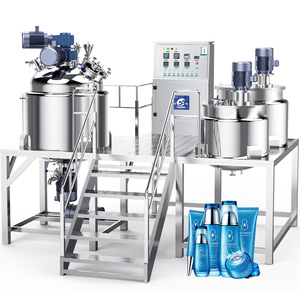
From 100-liter pilot batches to massive 1,000-liter vacuum homogenizer reactors manufactured in 316L marine stainless steel, our jacketed mixing vessels execute precise temperature control and ultra-shear sub-micron particle dispersion.
Equipped to handle micro-sachets (5–15 ml), skincare droppers, tubes, airless jars, Boston round glass bottles, and bulk 128 oz industrial salon gallons. Flexible tooling allows rapid changeovers between batch cycles.
Audited rigorously by SGS. Complete compliance infrastructure including automated lot code laser ablation, real-time batch records, micro-challenge PET testing, accelerated thermal stability (45°C oven), and export documentation.
Proven production pathways supplying products on shelves at Target, Ulta Beauty, CVS, Whole Foods, Walgreens, Amazon FBA, and high-end salon distribution channels across North America and Europe.
Procurement directors and brand sourcing managers face fundamental macroeconomic, environmental, and regulatory evolutions. Navigating supplier selection requires aligning with manufacturing facilities designed around upcoming operational standards:
The U.S. Modernization of Cosmetics Regulation Act demands mandatory electronic facility registrations, safety substantiation dossiers, adverse event logging, and rapid digital record retrieval. Procurement must vet supplier QA systems for digital automation over manual paperwork.
Post-consumer recycled (PCR) resin bottles and monomaterial polyolefin pumps exhibit higher wall thickness variances and reduced thermal stability during hot fills. Contract suppliers must utilize low-torque magnetic chucks and non-deforming pneumatic clamps to seal PCR containers without stress fractures.
Global container freight volatility and inventory carry costs are driving cosmetic houses to favor domestic and nearshore facilities in Miami and North America, reducing cycle intervals from overseas' 16–22 weeks down to an agile 4–8 weeks door-to-door.
The cosmetic filling industry is undergoing a digital and mechanical revolution. Traditional rotary filling carousels are yielding to modular servomotor-actuated monoblock workstations. Critical technology shifts integrated into our plant include:
Direct technical and commercial answers to help procurement managers evaluate MOQs, quality certifications, filling tolerances, and turnaround schedules.
Connect with our technical formulation chemists and production engineers. Submit your packaging specs, target viscosity, and volume forecast for a formal quote within 24 hours.
Send an Inquiry