CE Certified Benchmark Formula Matching Manufacturers & Exporters
Precision reverse engineering, high-throughput analytical reconstitution, and contract industrial compounding adhering to stringent European CE Directives, US MoCRA, and cGMP frameworks.
Precision Reverse Engineering & Formula Benchmark Instrumentation
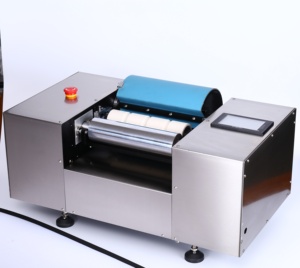
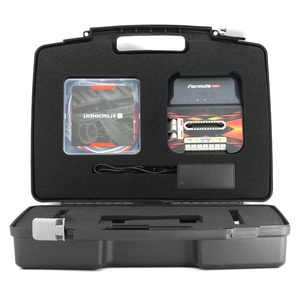
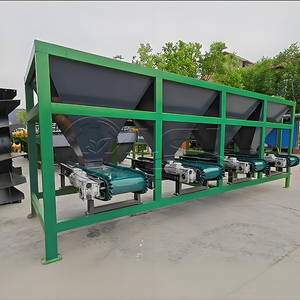
Explore our CE-certified testing apparatus, laboratory benchmark platforms, dynamic proportioning suites, and algorithmic matching solutions engineered for rigorous compliance and high-reproducibility batch formulation.
The Science of Benchmark Formula Matching: Analytical Reconstitution & Chromatographic Profiling
In modern chemical manufacturing, personal care formulation, and specialized coating development, benchmark formula matching represents far more than superficial ingredient replication. It is a precise analytical discipline founded upon advanced de-formulation chemistry, empirical rheology, and stoichiometric reconstitution. When brand innovators, industrial chemical consumers, and professional laboratories seek to reproduce or surpass an existing market benchmark, analytical chemists must resolve the compound down to its individual molecular constituents. Through an integrated pipeline utilizing High-Performance Liquid Chromatography (HPLC), Gas Chromatography-Mass Spectrometry (GC-MS), Fourier-Transform Infrared Spectroscopy (FTIR), and Inductively Coupled Plasma Optical Emission Spectrometry (ICP-OES), complex matrices are dismantled into surfactant profiles, functional actives, chelators, and preservative systems.
Crucially, analytical identification is merely the initial phase. The physical characteristics of the target formulation—shear-thinning indices, yield stress under dynamic oscillation, micellar packing geometry, and phase transition thresholds—dictate how the product performs during commercial application. At our FDA-registered, ISO 22716 cGMP compounding facility, our R&D laboratory pairs de-formulation data with empirical rheological modeling. Whether matching the skin-feel of a luxury emulsified serum, the mechanical shear resistance of industrial offset inks, or the bulk density and nutrient release profile of extruded agricultural pellets, every batch is developed to eliminate drift, delivering precise delta-zero (ΔE=0 or equivalent) functional equivalence to the reference standard.
Chromatographic De-Formulation
Multi-dimensional GC-MS and HPLC fraction isolation detect active concentrations down to 0.01% w/w, resolving proprietary emulsification bases, chiral lipids, and volatile organic profiles.
Oscillatory Rheology Matching
Viscoelastic spectrum measurement ensures identical yield stress, thixotropic recovery, and flow curves under automated filling stress and consumer hand manipulation.
Live Verification & In-House Salons
Haircare and topical benchmarks undergo split-panel sensory evaluations in our fully operational on-site testing salon, matching professional efficacy against tier-1 benchmark controls.
CE Conformity, International Regulatory Rigor, and Risk Mitigation
Sourcing benchmark formulations and analytical machinery across borders introduces legal, functional, and safety liabilities that can halt cross-continental supply chains if not properly mitigated. Within the European Economic Area (EEA), industrial equipment utilized for dynamic batching, offset proofing, and chemical testing must conform explicitly to the Machinery Directive 2006/42/EC, Low Voltage Directive 2014/35/EU, and Electromagnetic Compatibility (EMC) Directive 2014/30/EU. The CE mark is not a decorative badge—it is a mandatory legal guarantee that equipment has satisfied harmonized risk assessments, safeguarding both laboratory operators and industrial compounding teams.
Parallel to machinery compliance, the chemical formulations produced by these benchmark systems must satisfy rigorous export frameworks. In Europe, chemical inputs require exhaustive compliance with EC 1907/2006 (REACH) and EC 1223/2009 for cosmetic formulations, mandating rigorous Product Information Files (PIF) and safety assessments signed by qualified toxicologists. In the United States, our facilities fully conform with the Modernization of Cosmetics Regulation Act (MoCRA), guaranteeing facility registration, product listing, safety substantiation, and mandatory adverse event tracking. Partnering with a CE-certified and FDA-registered exporter ensures that formulations, packaging specifications, and heavy-metal impurities are audited systematically, safeguarding distributors from customs border interdictions and costly market recalls.
Manufacturing Infrastructure: The ALFA MFG Single-Facility Advantage
One of the most significant friction points in B2B chemical manufacturing and custom cosmetic export is fragmentation. A traditional procurement pathway frequently forces brand owners to manage disjointed entities: an external consulting chemist for reverse formulation, a third-party laboratory for stability testing, an off-site contract compounder, and an independent packager. This fragmented chain invariably generates accountability gaps, batch-to-batch variations, and schedule bloat.
Our comprehensive Miami production campus consolidates the entire development and manufacturing continuum under one roof. With 7,000 gallons of daily compounding capacity across mirror-polished 316L stainless steel jacketed reactor vessels, 17 automated inline filling lines capable of processing units from 5ml sachets to 128oz bulk carboys, and an audited SGS ISO 22716 / FDA-registered cGMP quality management system, we eliminate intermediary handoffs. Furthermore, our on-site live testing salon bridges theoretical laboratory formulation with practical real-world execution, allowing licensed practitioners to test haircare and topical viscosity, lather dynamics, cuticle deposit efficacy, and dermal sensorial qualities against reference benchmarks in real time.
Audit Dimensions
ALFA Benchmark Formulation
Conventional Contract Compounders
Fragmented Toll Manufacturers
R&D Reconstitution Capabilities
In-house GC-MS, HPLC, & On-Site Salon
Outsourced R&D / Third-Party Labs
No R&D; Customer Must Supply Recipe
CE & International Compliance
Full CE, FDA MoCRA, ISO 22716, cGMP
Regional compliance only; gaps in PIF files
Limited; local baseline sanitation only
Daily Compounding Output
7,000 Gallons / Day
1,000 – 2,500 Gallons / Day
Variable depending on machine load
Prototyping Lead Time
2 to 4 Weeks (Fee credited to order)
8 to 14 Weeks
Not Offered
Filling Lines & Versatility
17 Dedicated Lines (Sachets to 128oz)
3 to 5 Fixed Format Lines
Single format packaging only
Batch Scalability (MOQs)
Low MOQs (2,500 units) to Full Retail Runs
Rigid high minimums (10,000+ units)
Inconsistent batch repeatability
Future Procurement Trends: Where Benchmark Formula Matching is Heading
The landscape of benchmark formula matching is rapidly pivoting toward high-velocity data synthesis, micro-fluidic continuous compounding, and transparent sustainability validation. Procurement directors evaluating global manufacturing partners over the next five years must align with four structural shifts:
AI-Assisted Spectral Synthesis
Machine-learning algorithms now cross-reference database spectra against raw material inventories, predicting emulsion stability and shortening formula iteration loops by over 60%.
Clean Chemistry & Bio-Surfactants
Global procurement mandates are driving the phase-out of ethoxylated surfactants and cyclic silicones, necessitating bio-fermented alternative matching without compromising viscosity or foam density.
Digital Product Passports (DPP)
European supply chain mandates demand full batch-level carbon accounting, ethical supply verification, and computerized raw ingredient origin documentation down to lot levels.
Direct technical answers addressing the operational, legal, and financial queries international procurement teams present during supplier technical due diligence.
How does the benchmark formula matching process function from concept to production?
The process begins by submitting an unopened reference sample along with desired performance claims and target container specs. Our R&D laboratory conducts qualitative and quantitative de-formulation using HPLC, GC-MS, and FTIR spectroscopy. Chemists build an initial bench prototype within 2 to 4 weeks. Once the physical profile (pH, viscosity, specific gravity) and sensory characteristics are validated in our testing salon, stability testing (freeze-thaw, thermal cycling at 45°C, and centrifuge separation tests) is initiated, culminating in pilot compounding and high-speed packaging.
What specific CE documentation accompanies exported equipment and compounded goods?
For laboratory and batching machinery, exports include the official EU Declaration of Conformity (DoC), technical construction files adhering to Machinery Directive 2006/42/EC, Low Voltage Directive 2014/35/EU, and electromagnetic emissions test reports. For cosmetic and chemical goods destined for Europe, we deliver complete Product Information Files (PIF), safety assessments compliant with EC Regulation 1223/2009, full SDS according to REACH Annex II, and cGMP certificates verified under ISO 22716.
Who owns the intellectual property (IP) rights to a custom benchmark formula?
Under our custom formulation agreement, once the initial development fee is settled and contractual production minimums are executed, the custom formulation IP belongs exclusively to the client. We sign mutual Non-Disclosure Agreements (NDAs) prior to receiving physical benchmark samples, guaranteeing that trade secrets, custom compounding ratios, and client-specific active complexes remain strictly protected against cross-contamination or unauthorized disclosure.
What are your standard Minimum Order Quantities (MOQs) across diverse container formats?
MOQs are categorized strictly by packaging format to maintain optimal compounding yields: 10,000 units for thermoformed sachets (5–15 ml); 5,000 units for standard bottles/jars (10 ml to 2 oz), dropping to 2,500 units for luxury skincare serum formats; 2,500 units for larger personal care bottles, jars, and squeeze tubes (2.1 oz to 32 oz); and 480 units for industrial bulk 128 oz (1-gallon) containers.
How are stability and compatibility verified prior to full commercial batch release?
Formulations undergo an accelerated 12-week stability protocol mimicking 24 months of shelf life. Tests include exposure to constant 45°C thermal stress, cyclic freeze-thaw chamber testing (-10°C to 40°C over 5-day cycles), UV photostability chamber exposure, and high-speed centrifugation (3,000 rpm for 30 minutes) to check for phase separation, syneresis, or emulsion cracking. Simultaneously, chemical-container compatibility checks ensure package lining integrity, absence of plasticizer leaching, and vacuum leak resistance.
Can existing proprietary recipes be transferred into your facility for contract scaling?
Yes. Through our specialized contract manufacturing service, we routinely handle technical transfers. Our process engineering team reviews your Master Batch Record (MBR), audits the raw material supply chain, conducts pilot test runs in our 50-gallon mixing tanks, and optimizes the dispersion parameters for our 7,000 gal/day compounding reactors and automated multi-head filling infrastructure without modifying your target product characteristics.
What are the typical financial terms and lead-time schedules for international exports?
R&D development fees range from USD 500 to USD 1,000 depending on formula complexity and are 100% credited toward your first commercial production run. Production scheduling commences upon receipt of a 50% deposit, with the remaining balance due upon Quality Assurance sign-off and bill of lading generation. Standard lead times are 2 to 4 weeks for laboratory prototype samples, and 4 to 8 weeks door-to-door for full-scale commercial manufacturing and container dispatch.
How does ALFA MFG ensure strict batch-to-batch consistency across high-volume production?
Consistency is maintained through computerized PLC-driven batching systems, calibrated load-cell gravimetric monitoring, and strict in-process QA checkpoints. Viscosity, pH, specific gravity, and microbiological bio-burden are checked and logged for every vessel prior to release to our 17 fill lines. Retained samples from every single production lot are stored in our climate-controlled archival library for three years to maintain complete traceability.
Global Sourcing Made Predictable
Initiate Your Benchmark Formulation Matching Project
Consult with our lead chemical engineers and regulatory specialists. Submit your benchmark reference, evaluate our 1,000+ stock formulations, or schedule a technical audit of our Miami compounding plant.