Explore our turnkey private-label formulations, pharmaceutical-grade raw materials, and automated sanitary processing systems designed for seamless integration into CE-certified production lines.
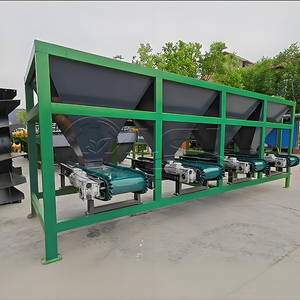
Operating under strict FDA Registration and ISO 22716 cGMP certification audited by SGS, our Miami plant combines high-throughput industrial machinery with clinical formulation science.
Fully compliant with the U.S. Modernization of Cosmetics Regulation Act (MoCRA) and European Regulation (EC) No 1223/2009. All filling lines utilize CE-marked electromechanical architectures with integrated Safety Integrity Level (SIL) controls.
From single-dose luxury sachets and airless pump bottles to high-viscosity jars and 128 oz backbar gallons. Our high-precision rotary and inline filling stations are equipped with positive displacement piston metering and servo net-weigh sensors.
Unlike typical toll-fillers who outsource feedback, our facility features a real-world cosmetology evaluation salon. Haircare and functional skin treatments undergo direct sensory, shear, and stability testing on real human hair and skin models before packaging runs.
When global brand directors source cosmetic contract filling partners, understanding the intersection of machinery safety standards (CE Mark) and Good Manufacturing Practice (ISO 22716 / cGMP) is paramount to preventing recalls, micro-leakage, and cross-contamination.
In international contract manufacturing, CE Certification operates on two distinct tiers: the operational compliance of the automated packaging and compounding machinery under the Machinery Directive (2006/42/EC) and Low Voltage Directive (2014/35/EU), and the finished goods compliance destined for the European Economic Area under EU Regulation (EC) 1223/2009.
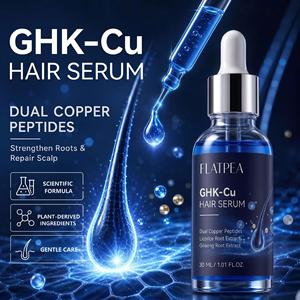
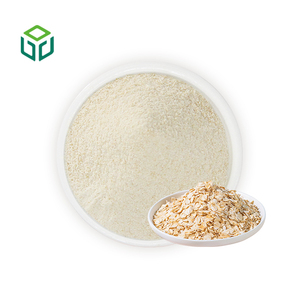
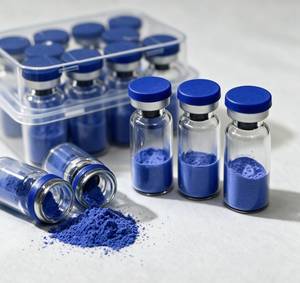
At our Miami manufacturing facility, all 17 filling lines incorporate automated electromechanical systems that feature CE-certified safety interlocks, closed-loop Clean-In-Place (CIP) systems, and electropolished 316L stainless steel fluid-path contact zones. This ensures that shear-sensitive peptides (such as Blue Copper GHK-Cu), multi-phase emulsified serums, and colloidal oat suspensions are metered without thermal degradation or trace heavy metal leaching.
Furthermore, European and North American customs border controls have tightened inspection over cosmetic safety declarations. By holding an unbroken chain of custody through ISO 22716 certifications audited by SGS, our partners receive batch-level release certificates, micro-challenge test records, and volumetric verification sheets aligned with both U.S. FDA MoCRA and European CPNP (Cosmetic Products Notification Portal) requirements.
| Packaging Format | Volumetric Dosing Mechanism | Standard Viscosity Range | Sealing / Capping Protocol | Compliance Verification |
|---|---|---|---|---|
| Ampoules & Glass Serums (10–50ml) | Peristaltic / Micro-Diaphragm | 1 – 1,200 cPs (Water to Light Gel) | Nitrogen blanketed dropper/pipette assembly | USP 61/62 microbial check, CE EMC tested |
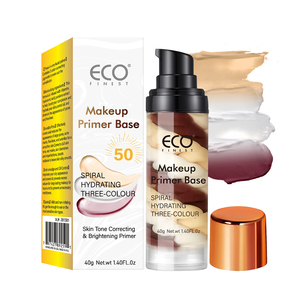
| Multi-Chamber / Swirled Primers | Synchronized Multi-Nozzle Rotary Piston | 5,000 – 45,000 cPs (Thixotropic Paste) | Dual-plunger atmospheric airless crimp | Phase-separation optical scan, ISO 22716 |
| Collapsible Polymer Tubes (30–250ml) | Positive Displacement Bottom-Up Nozzle | 10,000 – 250,000 cPs (Creams & Pastes) | High-frequency ultrasonic seal & batch trim | Pressure burst test ≥ 0.35 MPa, CE Machinery |
| High-Viscosity Emulsion Jars | Auger / Cam-Driven Piston Valve | 20,000 – 500,000 cPs (Butters/Wax Blends) | Induction heat foil seal + Torqued screw cap | Vacuum leak decay test (ASTM D4991) |
| Unit-Dose Foil Sachets (2–15ml) | Four-Side Rotary Roll-Fed Metering | 500 – 30,000 cPs (Lotions / Treatments) | Multi-zone PID thermal boundary weld | Dye penetration seal integrity testing |
Strategic supply chain directors are moving away from fragmented sourcing models. Here are the macro shifts driving cosmetic contract filling procurement decisions globally.
Historical supply chains relied on purchasing bulk formulations from chemical formulators, shipping drums to third-party contract fillers, and utilizing separate packagers. By 2026, over 74% of enterprise brands will require vertically integrated compounding and filling under one roof to mitigate transport bio-contamination risks, oxidation losses, and freight carbon tariffs.
The volatility of social-commerce launches (TikTok Shop, specialized subscription boxes) has forced a revolution in Minimum Order Quantities. Procurement teams increasingly demand agile contract fillers capable of initiating runs at 2,500 units for new launches, while maintaining the automation capacity to seamlessly ramp to 100,000+ units within 6 weeks of retail expansion.
With global regulatory mandates penalizing virgin plastics, contract fillers must engineer custom nozzle geometries and vacuum decanting systems capable of handling 50% to 100% PCR resins without wall collapse, dimensional variance leakage, or cap strip torque failures.
From AI-assisted vision rejection to nitrogen-purge lyophilized compounding, next-generation contract packaging leverages cutting-edge mechanical automation.
Modern clinical formulas utilize delicate actives such as 99% pure lyophilized blue copper peptides (GHK-Cu), micro-encapsulated retinaldehydes, and pure Vitamin C. Filling lines now implement positive-pressure inert gas purging (argon/nitrogen) prior to nozzle injection and immediately post-fill, driving residual oxygen levels in the headspace below 1.5% to extend formula stability by up to 24 months.
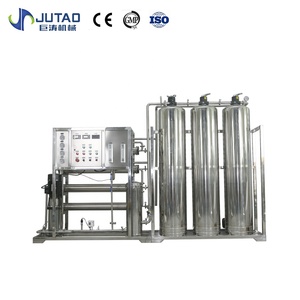
Utilizing industrial homogenizing technology like the JUTAO RO System (50L–1000L), our facility achieves microscopic droplet distributions of 0.2 to 2 microns. This ultra-fine dispersion prevents phase separation during prolonged shelf life and enables luxurious skin sensory profiles without relying on high concentrations of synthetic silicone texturizers.
High-speed optical camera arrays monitor every unit at 180 units/minute. The system conducts automated checks on fill levels, pump stem insertion depth, induction foil seals, tamper-evident neck bands, and batch/lot laser coding, immediately ejecting non-conforming units from the conveyance stream without line interruption.
Clear, direct answers regarding minimum run sizes, technical transfer protocols, testing salon feedback integration, and global customs documentation.
Whether you require rapid private label execution or high-throughput CE certified contract filling across our 17 production lines, our technical engineering team is ready to review your product specifications.
Get a Quote