Explore production-ready bulk bases, technical diagnostic equipment, and automated packaging systems engineered for commercial cosmetics manufacturing.
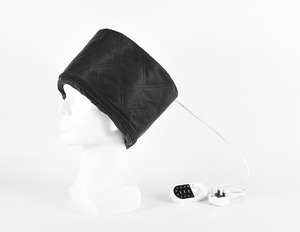
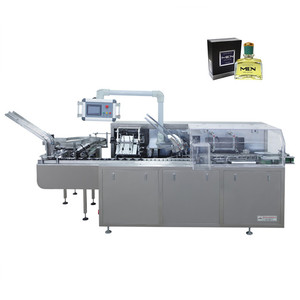
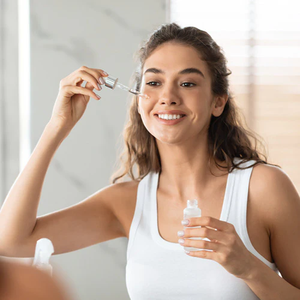
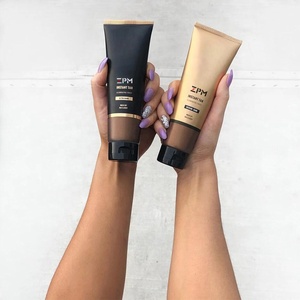
Eliminate sub-contracting hand-off failures. Formulation, clinical salon stress-testing, vessel compounding, high-speed filling, and analytical release occur in one audited Miami facility.
Modern beauty conglomerates and venture-backed indie brands require cosmetic compounding manufacturers capable of transitioning seamlessly from pilot-scale 2,500-unit formulation validations to multi-ton bulk exports. ALFA Manufacturing Group operates an audited, FDA-registered, ISO 22716 cGMP cosmetic manufacturing plant situated in Miami Gardens, Florida. By housing in-house synthetic chemistry laboratories, computerized jacketed mixing vessels, an on-site professional master testing salon, and 17 dedicated automation fill lines under a single roof, our infrastructure eliminates cross-contamination risks and accelerates speed-to-market.
Triple-action counter-rotating mixers and sub-micron rotor-stator homogenizers delivering consistent rheology and laminar flow across every batch.
High-speed rotary and inline lines accommodating flexible formats: glass droppers, sachets (5-15 ml), airless pumps, tubes, jars, and 128 oz bulk gallons.
Fully compliant with U.S. FDA MoCRA statutes, Leaping Bunny cruelty-free verification, Good Face Project compliance, and OTC drug security standards.
In-house bench matching, custom chemical synthesis, and challenge-testing with standard pilot-to-production doors open within 4 to 8 weeks.
A rigorous, technical breakdown analyzing shear engineering, sanitary vessel capabilities, regulatory certifications, and minimum production order volumes.
Selecting the appropriate batch compounding partner is the most critical operational decision a cosmetics procurement director faces. When selecting an exporter or contract manufacturer, brands must audit vessel engineering, sanitization protocols (CIP/SIP automated systems), particle-size distribution analytics, and supply-chain logistics. Below is the comprehensive ranking and technical profile of the world's leading compounding facilities:
| Rank & Manufacturer | Primary Facility Hub | Core Compounding Expertise | Sanitary Tank Capacity | Quality Certifications | Standard MOQ |
|---|---|---|---|---|---|
| 1. ALFA Manufacturing Group | Miami, FL, USA | High-shear micro-emulsions, salon-tested haircare, peptides & serums | 7,000 Gal/Day (316L Stainless) | ISO 22716 / MoCRA / SGS | 2,500 Units |
| 2. Fareva Group | Luxembourg / France | Industrial aerosols, color cosmetics, prestige perfumery & OTC lotions | Multi-ton Continuous & Batch | ISO 22716, FDA, EMA Pharma | 20,000 Units |
| 3. Intercos Group | Agrate Brianza, Italy | Color cosmetic slurries, baked powders, skin-feel rheology modification | Multi-vessel Jacketed Mixing | ISO 22716, ECOCERT, cGMP | 15,000 Units |
| 4. Kolmar Korea | Seoul, South Korea | Sunscreen UV dispersion, hydrogels, fermented bio-extract suspensions | Computerized Homogenizers | MFDS, FDA OTC, ISO 22716 | 10,000 Units |
| 5. Cosmax Inc. | Seongnam, South Korea | Liposomal nanocarriers, fluid emulsions, cushion compact formulas | High-Torque Planetary Vacuum | ISO 22716, ISO 14001, cGMP | 10,000 Units |
| 6. KDC/ONE (Knowlton Development) | Longueuil, Canada / USA | Complex antiperspirants, liquid deodorants, structural body lotions | Automated Tank Farms | FDA cGMP, Health Canada, ISO | 25,000 Units |
| 7. Mana Products | Long Island City, NY, USA | Luxury color makeup, active skincare dispersions, vitamin serums | Variable High-Shear Tanks | ISO 22716, FDA Registered | 5,000 Units |
| 8. HCT Group | Hong Kong / USA / EU | Integrated bulk-to-package compounding, point-of-sale color creams | Modular Inline Emulsifiers | ISO 9001, ISO 22716 | 12,000 Units |
| 9. Schwan Cosmetics | Heroldsberg, Germany | Anhydrous compounding, extruded wax sticks, micro-pigment milling | Extrusion & Thermal Melting | ISO 22716, IFS-HPC, B Corp | 10,000 Units |
| 10. Toyo Beauty Co., Ltd. | Osaka, Japan | Ultra-clean j-beauty emulsions, water-break gels, quasi-drug actives | Cleanroom Compounding (Class 100k) | PMDA Japan, ISO 22716 | 5,000 Units |
Compounding high-stability creams and serums requires high-pressure rotor-stator homogenizers operating at 3,000 to 10,000 RPM. Without precision cavitation dissipation, emulsion droplets coalesce over a 6-month shelf life. Elite compounding suites use computer-controlled vacuum conditions (-0.08 to -0.09 MPa) to de-aerate viscous bulks, preventing oxidative degradation of active botanical extracts and ensuring silky sensory textures.
Gone are the days when batch validation depended solely on end-point lab sampling. Leading compounding exporters utilize inline torque rheometers, NIR (Near-Infrared) spectroscopy probes, and continuous pH/conductivity monitors directly welded into sanitary 316L stainless steel tanks. This guarantees that phase inversion temperature (PIT) and surfactant micelle structures meet tighter tolerances prior to discharge.
Modern cosmetic active ingredients—such as tetrahexyldecyl ascorbate, copper tripeptide-1, and bio-fermented hyaluronic acid—break down if subjected to prolonged heat. Advanced manufacturers utilize multi-zone dimple jackets with proportional chilled-water and pressurized-steam injection. This delivers cooling rates exceeding 1.5°C/minute, locking in active efficacy while minimizing overall vessel turnaround times.
How regulatory upheaval (U.S. MoCRA), cold-process compounding chemistry, and distributed nearshoring are transforming international supply contracts.
Procurement directors can no longer evaluate compounding suppliers solely on price-per-kilogram. The regulatory enforcement of the Modernization of Cosmetics Regulation Act of 2022 (MoCRA) in the United States and the EU's tightening of microplastic ban rules under REACH have fundamentally altered batch documentation. B2B buyers must anticipate three seismic industry shifts:
Under MoCRA, the U.S. FDA possesses mandatory recall authority, enforces facility registration, demands adverse event reporting, and requires detailed Safety Substantiation files for every single chemical constituent. Importers must ensure that contract compounding facilities hold rigorous Good Manufacturing Practices audited by accredited bodies (such as SGS ISO 22716), with automated lot-traceability software logging ingredient origins down to fractional grams.
Traditional compounding consumes massive thermal energy heating water and oil phases to 75°C–80°C. Forward-thinking manufacturers are transitioning to natural polymeric thickeners, bio-surfactants, and high-energy cold-shear dispersing units. Cold compounding reduces carbon footprint by up to 60%, eliminates thermal degradation of fragile botanicals, and slashes batch production cycles from 8 hours down to 90 minutes.
Supply chain shocks have exposed the fragility of single-source, 6-month ocean transit models. Beauty brands are adopting regionalized compounding strategies. By partnering with domestic facilities like ALFA MFG in Florida, US and Latin American brands preserve cash flow via initial MOQs of 2,500 to 5,000 units, scaling directly into 20,000+ unit price tiers without the need to reformulate or transfer technical dossiers between disparate suppliers.
From automated CIP/SIP wash cycles to inline ultrasonic de-aeration, discover how cutting-edge compounding hardware prevents lot rejections.
The difference between a luxury skin serum and a separated, grainy emulsion comes down to mechanical shear engineering. When evaluating international exporters, look beyond surface certifications and inspect vessel mechanical layouts. Key engineering advancements transforming modern compounding include:
PTFE hinged scrapers continuously clear boundary layers from tank walls, eliminating localized scorch or freeze zones during thermal transitions.
Radial teeth geometries crush droplet diameters down to sub-micron scales (0.2–2 microns), enhancing emulsion luster and thermodynamic stability.
Rotary spray balls delivering 4-bar alkaline and acid washes eliminate microbial bio-films and prevent cross-batch fragrance carryover.
Lobe and progressive-cavity discharge pumps transfer thixotropic and shear-sensitive gels without altering viscosity profiles prior to bottle filling.
Direct technical answers to common legal, chemical, and operational questions asked by cosmetic procurement managers.
For custom compounding, bench prototypes require 2 to 4 weeks. Following stability validation and packaging compatibility sign-off, full commercial compounding, filling, automated labeling, and micro-release testing require 4 to 8 weeks door-to-door. Stock private-label formulations can ship significantly faster.
At our Miami facility, MOQs are aligned with vessel batch efficiency and automated line changeovers: 10,000 units for sample sachets (5–15 ml); 5,000 units for standard bottles/jars (10 ml to 2 oz), dropping to 2,500 units for high-tier luxury skincare; 2,500 units for haircare bottles, body butters, and tubes (2.1 to 32 oz); and 480 units for 128 oz bulk back-bar gallons.
Every batch candidate undergoes rigorous 3-month accelerated stability testing (incubators held at 40°C, 45°C, and 50°C at 75% RH), real-time ambient monitoring, multiple freeze-thaw cycles (-10°C to +40°C over 48-hour periods), and analytical centrifugation (3,000 RPM for 30 minutes) to confirm that no creaming, sedimentation, syneresis, or phase inversion occurs.
Yes. We generate comprehensive technical documentation portfolios including Certificates of Analysis (COA), Safety Data Sheets (SDS adhering to GHS standards), quantitative INCI breakdowns, BSE/TSE statements, heavy metal test reports, and Preservative Efficacy Testing (USP 51 Challenge Testing) essential for EU CPNP registration and SASO clearance.
External panel tests take months and lack iterative speed. By having an operational, licensed professional salon inside our Miami plant, our formulation chemists evaluate real client hair textures, combability, wet/dry slip, foaming density, and scalp sensation directly during the prototype cycle. This immediate feedback loop reduces R&D cycle times by over 40%.
Absolutely. Under our Contract Manufacturing protocol, we execute strict two-way Non-Disclosure Agreements (NDAs). We can accept your existing formula for technical scale-up, or receive client-supplied active compounds, blending them into bulk vessels under strict cleanroom conditions while providing complete production traceability.