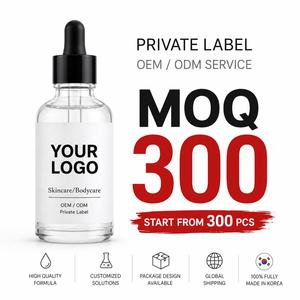
Direct from FDA-registered facilities and precision packaging lines. Review core technical specifications, container compatibility, and procurement minimums below.
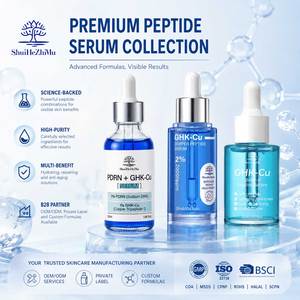
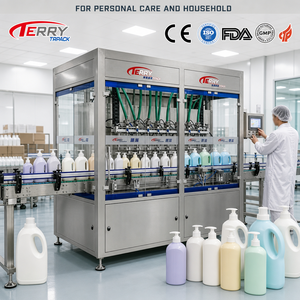
The global white-label skincare ecosystem is undergoing a generational shift. Driven by rigorous international regulatory standards—most notably the full implementation of the Modernization of Cosmetics Regulation Act (MoCRA) in the United States and Regulation (EC) No 1223/2009 across the European Union—procurement teams are pivoting away from fragmented brokerage networks toward centralized, audited, and technologically integrated contract manufacturing facilities. Brand longevity no longer depends solely on creative marketing; it hinges on supply chain integrity, micro-challenge test verifications, stability testing protocols under ICH guidelines, and scalable compounding infrastructure.
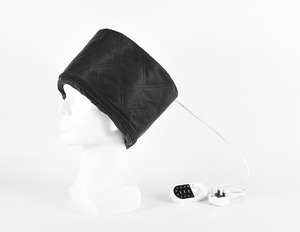
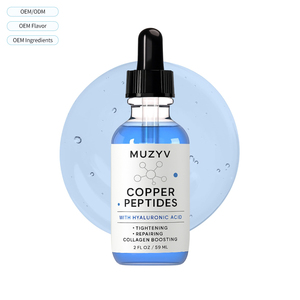
When engineering a modern skincare line, evaluating a manufacturing partner requires balancing laboratory innovation with large-scale industrial capability. Whether a brand is sourcing high-potency biomimetic peptide solutions (such as GHK-Cu Copper Tripeptide coupled with octapeptide SNAP-8), complex triple-emulsion barrier restore creams, or specialized professional salon hair therapies, the factory must demonstrate certified adherence to Good Manufacturing Practices (cGMP under ISO 22716) and direct registration with governing agencies.
Procurement executives evaluate factories based on turnaround reliability, cleanroom automation, IP security, batch reproducibility, and container versatility. Below is a structured audit matrix comparing operational strengths across major global white-label manufacturing tiers:
| Manufacturer Classification | Core Formulation Capabilities | Batch Scale & MoCRA Readiness | Avg. Prototype Turnaround | Ideal Procurement Stage |
|---|---|---|---|---|
| Centralized US cGMP Hubs (e.g., ALFA MFG Miami) | Clinical actives, copper peptides, biomimetic serums, professional hair & body care | 7,000 gal/day compounding; 17 fill lines; fully audited SGS ISO 22716 | 2 to 4 weeks (credited R&D fee) | Omnichannel scaling (Target, Ulta, Sephora, medspas, global D2C) |
| K-Beauty Specialized Labs (Incheon/Seoul) | Fermented filtrates, snail secretion, Centella Asiatica barrier essences, sheet masks | Agile small-batch to high-speed lines; Korean MFDS audited | 3 to 5 weeks | Trend-driven indie brands seeking Korean glass-skin certifications |
| Western European Cosmetic Ateliers (France/Italy) | Luxury organic bases, high-end perfumed skincare, anti-pollution botanical extracts | High regulatory compliance (Ecocert, COSMOS, EU 1223/2009 PIF) | 4 to 8 weeks | Prestige retail, medical aesthetic clinics, European boutique luxury |
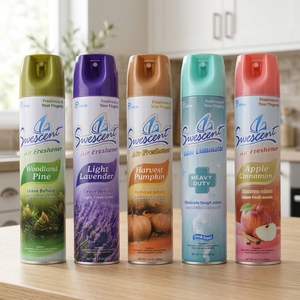
| East Asian High-Speed Industrial Plants (Guangdong/Zhejiang) | Mass-market moisturizers, high-volume cleansing balms, aerosol/spray home lines | Massive automated output; 50,000+ unit high-speed runs | 1 to 3 weeks | High-volume discounters, global price-competitive supermarket lines |
Operating out of our FDA-registered facility in Miami Gardens, Florida, ALFA Manufacturing Group eliminates the vulnerabilities associated with third-party sub-contracting. In contract beauty manufacturing, latency typically occurs at handover points: transferring lab bench formulas to compounding tanks, sending bulk liquid out for third-party bottle filling, or coordinating off-site stability testing. ALFA combines compounding, filling, secondary packaging, and clinical testing under one roof:
Haircare and topical active formulas are directly applied and evaluated on real clients by licensed stylists in our integrated salon, shortening empirical feedback loops from months to hours.
Equipped for benchmark reverse engineering, active ingredient stability screening, viscosity tuning, and full preservation efficacy testing (USP 51 challenge protocols).
Turnkey packaging spanning 5ml ampoules and multi-chamber dropper bottles to aluminum tubes, jars, and 128oz bulk salon gallons, calibrated with zero-drip pneumatic heads.
Formulation strategy determines whether a skincare line captures premium market share or languishes on clearance shelves. Sourcing teams must prioritize chemical stability, multi-pathway active delivery, and clean-label compliance.
Modern consumers scrutinize INCI ingredient lists for clinical efficacy. The combination of Copper Tripeptide-1 (GHK-Cu) with synthetic neuropeptides such as Acetyl Octapeptide-3 (SNAP-8) represents the forefront of non-invasive anti-aging care. GHK-Cu functions as a critical signaling peptide that stimulates glycosaminoglycan synthesis and wound-healing pathways, while SNAP-8 modulates neuromuscular signal pathways to reduce deep facial expression lines. Because copper peptides are susceptible to oxidation and unchelated metal instability, top white-label laboratories utilize micro-encapsulation or specialized chelating buffer networks with low-molecular-weight Hyaluronic Acid to ensure long-term shelf potency without discoloration.
Harsh surfactant stripping is obsolete. Today's commercial beauty market demands barrier-preserving surfactant systems built on sodium cocoyl isethionate and glucoside derivatives. In treatment serums, postbiotic lysates (Lactobacillus, Bifida) and bio-fermented botanicals reinforce the stratum corneum microflora. Factories must formulate these active complexes without destabilizing the broad-spectrum preservative systems required by cGMP standards.
Environmental stewardship and formula potency are driving the shift toward water-reduced or anhydrous products. By replacing standard deionized water bases with certified organic Aloe Barbadensis leaf juice, Centella Asiatica distillates, or botanical hydrosols, brands can market 100% active formulations. These systems present unique viscosity challenges that require high-shear homogenization compounding tanks (such as ALFA's 7,000-gallon daily compounding capacity) to maintain stable, non-separating liquid crystals.
Enterprise procurement professionals are reshaping how contracts are negotiated and fulfilled. The era of blind bulk production runs with 20-week lead times is being replaced by agile, responsive manufacturing architectures.
Rather than locking up liquidity in 25,000-unit initial runs, brands demand 2,500 to 5,000-unit pilot runs. Once digital channel traction is proven, factories must immediately scale to 20,000+ units on automated lines without formula drift.
Under US MoCRA guidelines, brands must submit product listings, facility registrations, and safety substantiations. Sourcing contracts require turnkey technical dossiers: Certificates of Free Sale, full Batch Records, SDS, and Heavy Metal/Microbial screen results.
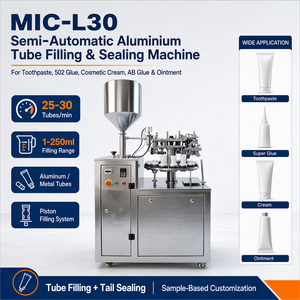
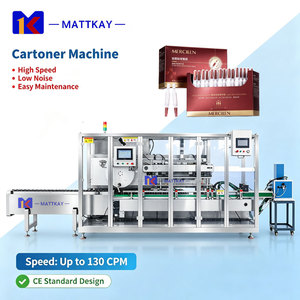
Cross-contamination risks and transport emissions during intermediate bulk handling have led buyers to favor suppliers that integrate compound manufacturing with automated tube filling, sealing, and continuous motion cartoning machinery.
Modern procurement executives prioritize manufacturers that offer transparent costing. ALFA MFG credits the initial $500–$1,000 R&D formulation development fee directly to the first production run, establishing a risk-shared partnership from prototype sampling through retail shelf distribution.
Key technical and commercial answers addressing production run times, formulation parameters, minimum thresholds, and compliance protocols.
Initial R&D formulations and benchmark matching are completed in 2 to 4 weeks. Following final approval of formula stability and packaging compatibility, full commercial batch compounding, micro-testing, filling, and final packing take 4 to 8 weeks door to door.
Production minimums depend on line mechanics and wash-down overhead: custom unit sachets (5–15ml) require 10,000 units; small-format luxury skincare bottles and jars (10ml–2oz) start at 2,500 units; standard bodycare and hair care containers (2.1oz–32oz) run at 2,500 units; bulk institutional gallons (128oz) are available from 480 units.
Yes. Our in-house R&D laboratory conducts quantitative deconstruction and benchmark reverse-engineering. Send the reference commercial product along with target sensory attributes, texture targets, and marketing claim criteria; our formulation chemists synthesize working prototypes within 2 to 4 weeks.
Every commercial-grade formula undergoes accelerated thermal stability testing (40°C, 45°C, and freeze-thaw cycling over 30 to 90 days), visual separation checks via centrifuge, pH verification, dynamic viscosity profiling, and USP 51 preservative challenge testing before batch clearance.
With custom formulation agreements, once agreed production thresholds or development terms are fulfilled, the proprietary master formulation, method of manufacture, and technical dossiers remain client-owned. White-label stock catalog formulations remain licensed for the client's exclusive brand packaging.
As an FDA-registered and SGS-audited ISO 22716 cGMP plant, we supply full technical dossiers including Certificates of Analysis (COA), safety assessments, detailed INCI breakdowns, batch records, and Certificates of Free Sale required for FDA e-filings, Health Canada notifications, and EU CPNP dossiers.