Engineered under ISO 22716 certified cleanroom controls, our active skus and automated hardware units are tailored for commercial scaling, clinical efficacy, and transnational export compliance.
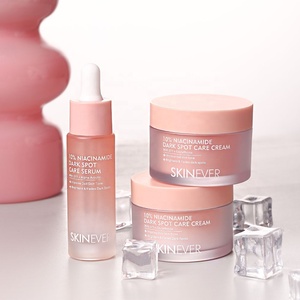
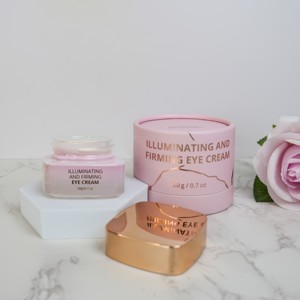
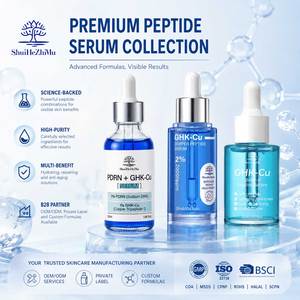
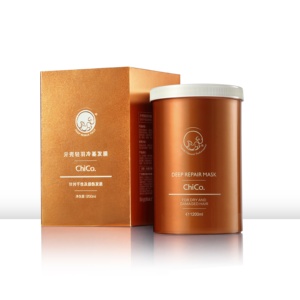
In modern beauty commerce, sourcing contract manufacturing within the United States is no longer merely a geographical distinction; it is a strategic hedge against supply chain volatility, regulatory fragmentation, and consumer skepticism. Operating out of our advanced, FDA-registered manufacturing infrastructure in Miami Gardens, Florida, our OEM/ODM ecosystem converges precision chemical formulation, automated high-throughput manufacturing, and comprehensive export compliance under a single unified governance system. This whitepaper analyzes the localized deployment paradigms, market transitions, and operational benchmarks governing cosmetic contract production and transnational export from the USA to global markets.
Transnational brand directors, prestige distributors, and retail aggregators are fundamentally reshaping their procurement protocols. Where overseas procurement historically carried unpredictable maritime transit delays, regulatory discrepancies under evolving U.S. Modernization of Cosmetics Regulation Act (MoCRA) parameters, and batch-to-batch variation, domestic U.S. manufacturing provides verified traceability, cGMP compliance audited by international bodies such as SGS, and seamless integration into retail juggernauts including Target, Ulta Beauty, Sephora, CVS, and Amazon Premium Beauty.
OEM skincare and haircare systems must be formulated with direct consideration of their point of sale, skin biome profiles, and climate environments across consumer hubs.
Clinical post-procedure skincare requires inert lipid bases, non-comedogenic active delivery, and surgical micro-emulsions capable of barrier restoration without triggering erythema.
Formulations such as our GHK-Cu Copper Peptide and high-potency Niacinamide concentrates are stabilized at biocompatible pH levels (5.5–6.0), designed specifically to complement micro-needling, laser ablation, and chemical peels.
Scaling into enterprise shelf environments like Target, Walmart, and Ulta demands absolute batch reproducibility, Drop-Test certified rigid packaging, and automated barcoding compliance.
Our 17 high-speed automated packaging lines handle high-viscosity body butters, foaming sulphate-free washes, and active serums with zero particulate drift, backed by automated EDI warehouse connectivity.
Professional salon stylists demand immediate tactile transformation, rich flash foams, thermal shielding, and cuticle sealing without heavy synthetic siloxanes.
Formulations undergo direct real-world stress testing in our exclusive on-site Miami testing salon, evaluating slip, combability, tensile resilience, and shine on diverse hair porosities prior to full compounding.
The regulatory and technical landscape of cosmetic creation is experiencing fundamental upheaval. Manufacturers who thrive are those engineering at the cross-section of strict statutory compliance and biotechnological innovation.
The U.S. Modernization of Cosmetics Regulation Act (MoCRA) has established stringent federal mandates for facility registration, mandatory product listings, adverse event reporting, and safety substantiation. Sourcing from our validated Miami facility guarantees immediate compliance, shielding brands from regulatory interception.
Traditional non-functional emollients are being replaced by high-precision actives. Formulations utilizing bio-synthetic GHK-Cu, SNAP-8 octapeptides, and biomimetic signal peptides represent the fastest-growing sector in prestige skincare, offering clinical proof points with clean-ingredient pedigrees.
Brand sustainability metrics prioritize low-carbon footprint manufacturing. We implement cold-process emulsification techniques that conserve thermal energy while protecting delicate botanical actives, enzymes, and antioxidants from thermal degradation during high-shear homogenization.
Harsh exfoliants have given way to epidermal microbiome optimization. Our research laboratory specializes in physiological ceramide ratios (1:3:1), ectoin environmental shields, and fermented botanical hydrolysates that strengthen the stratum corneum without disrupting delicate cutaneous flora.
Consumer and retail scrutiny has driven massive adoption of PCR plastics, mono-material recyclable aluminum tubes, and refillable glass airless vessels. Our 17 filling lines are mechanically customized to handle diverse post-consumer substrates without compromising container closure integrity.
Global beauty brands rely on U.S. manufacturing for high-status "Made in USA" prestige. Exporting requires specialized Free Sale Certificates (CFS), INCI dossier harmonization, and real-time microbiological assay testing to cross European, Middle Eastern, and Asian customs gates effortlessly.
Operating out of our centralized Miami Gardens production facility, we unite cosmetic chemistry, rapid prototyping, and automated filling into a singular, highly accountable manufacturing pipeline.
Our formulation laboratory houses experienced cosmetic chemists who pioneer original formulas or perform exact analytical benchmark matching in 2–4 weeks.
Fee Credited: The USD 500–1,000 initial development fee is credited back directly toward your first commercial production run.
Our facility holds active FDA registration under MoCRA, cGMP compliance, and ISO 22716 certification audited by SGS, Leaping Bunny cruelty-free, and Good Face Project validation.
Every compounded batch receives complete Certificate of Analysis (COA) documentation, heavy metal testing, and challenge testing.
Unlike third-party labs that rely on abstract algorithmic modeling, our Miami factory features a fully operational, licensed on-site testing salon.
Every shampoo, restorative mask, and serum is evaluated by professional master stylists and real human subjects across multiple wash and blowout cycles before formula approval.
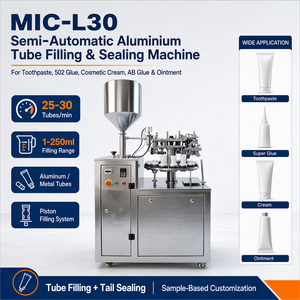
Equipped with 17 specialized automated fill lines handling sachets (5–15 ml), clinical dropper bottles, fine-mist spray pumps, aluminum collapsible tubes, and 128 oz bulk salon backbar containers.
We boast a compounding capacity exceeding 7,000 gallons per day, delivering finished goods door-to-door in 4–8 weeks.
For brand directors and international buyers, procurement risk stems from ambiguity in timeline control and documentation hand-offs. We resolve this by structuring our OEM pipeline into four rigorously documented operational phases:
Stage 01: Product Induction & Commercial Scoping
We establish structural constraints, target unit economics, active botanical selections, fragrance load, viscosity thresholds, and retail shelf claims (e.g., silicone-free, peptide-fortified, vegan). Quotes are issued with locked 30-day price validity and explicit minimum order quantity boundaries.
Stage 02: Formulation Chemistry & Rapid Prototyping
Our R&D chemists generate physical sample prototypes within 2–4 weeks. Each candidate formula undergoes centrifuge stability tests, freeze-thaw thermal cycling (-10°C to +45°C), and real-time sensory evaluation in our on-site salon. Clients generally approve formulations within 1 to 3 iterative sample rounds.
Stage 03: Compliance Dossier & Export Verification
Before mass compounding, our regulatory department finalizes full safety documentation: INCI ingredient breakdowns, Certificate of Analysis (COA), Safety Data Sheets (SDS), Preservative Efficacy Testing (USP 51), and export-specific Certificate of Free Sale (CFS) for target overseas markets.
Stage 04: Industrial Compounding, Automated Packaging & Freight Release
Upon receipt of the standard 50% production deposit, production is scheduled. Bulk mixing occurs in our high-capacity stainless steel jacketed tanks, followed by sterile automated filling, laser batch coding, shrink capping, induction sealing, and container palletization. Final goods are released into your freight forwarder's hands or arranged via door-to-door intermodal freight within 4 to 8 weeks.
Critical answers concerning MOQs, regulatory liability, turnaround schedules, and export mechanics.
Under MoCRA, all cosmetic facilities manufacturing products for distribution must be registered with the FDA, and each cosmetic SKU must have a formalized product listing detailing ingredients and adverse-event recording systems. ALFA MFG operates an FDA-registered facility, and our regulatory staff provides full documentation support, ensuring your brand complies seamlessly with federal authorities without risk of product recall or importation seizure.
MOQ parameters are governed by filling line efficiency and packaging tooling: Sachets (5–15 ml) require 10,000 units; dropper bottles and jars (10 ml – 2 oz) require 5,000 units (lowered to 2,500 units for luxury clinical skincare); standard bottles, jars, and squeeze tubes (2.1 oz – 32 oz) require 2,500 units; and commercial 128 oz salon backbar gallons require 480 units per SKU.
Yes. Our in-house research laboratory specializes in analytical reverse engineering and benchmark refinement. By providing a physical container of your benchmark product alongside your desired target claims (e.g., enhanced slip, fragrance modification, clean ingredient substitution), our chemists match texture, viscosity, sensory finish, and functional performance within 2 to 4 weeks.
We provide full export dossier packages, including Certificate of Free Sale (CFS), Certificate of Analysis (COA), ISO 22716 compliance documentation, Safety Data Sheets (SDS formatted to GHS international standards), BSE/TSE statements, and quantitative ingredient listings aligned with EU, UK, GCC, and ASEAN cosmetic directives.
Custom formula development incurs a nominal fee of USD 500 to USD 1,000, covering chemist bench time, specialized active sourcing, physical prototype production, and up to three sample adjustment rounds. Upon approval of the formulation, this entire fee is credited back directly against the balance of your first commercial production order.
Prototyping takes 2 to 4 weeks. Once the formulation, packaging compatibility, and artwork proofs are formally signed off, industrial compounding and automated filling require 4 to 8 weeks. For rush launches utilizing our catalog of 1,000+ pre-tested stock formulas, door-to-door delivery schedules can be accelerated significantly.
Whether you require rapid private label branding, clinically validated peptide formulation, or high-volume automated contract filling for global retail distribution, our Miami engineering and compounding facility is equipped to scale your beauty enterprise.