Compounding Machinery
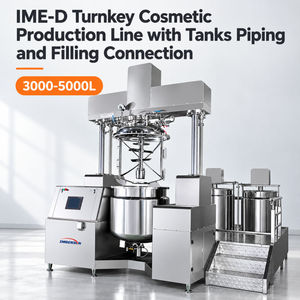
Imberson IME-D Turnkey Cosmetic Production Line with Tanks Piping and Filling Connection High Shear Homogenizer Machine
Viscosity Up to 100,000 cps
Get Catalog
From advanced high-shear homogenizing reactors to stabilized active serums and clinical aesthetic prep creams, explore our production engineering capabilities.
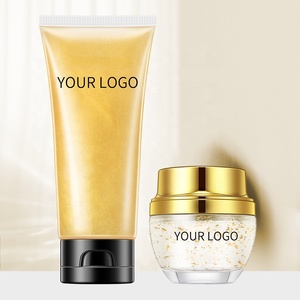
Combining domestic supply-chain efficiency with FDA, cGMP, and MoCRA regulatory compliance for risk-free international commercialization.
By producing our own pharmaceutical-grade mixing machinery and turnkey high-shear homogenizers alongside skincare batching, we eliminate third-party mechanical variance and maintain complete oversight over shear rates, emulsion stability, and particle size distribution.
Operating under ISO 22716 and cGMP audited manufacturing standards. Continuous HEPA filtration, microbiological air and water monitoring (USP grade purified water systems), and isolated filling suites ensure zero bio-burden contamination across clinical skincare batches.
Full support for global market authorizations including U.S. MoCRA registration, EU Cosmetic Product Safety Reports (CPSR/PIF), Health Canada notifications, and ASEAN compliance. We provide full stability data, challenge testing, and heavy-metal assay certificates.
Specializing in challenging emulsions: nano-liposomal encapsulations of Retinoids, stabilized Vitamin C tri-complexes, biocompatible peptides, and lamellar barrier repair creams that mimic the intercellular lipid matrix of the epidermis without surfactant instability.
We mitigate inventory capital risk for enterprise procurement by offering small-batch pilot validations (starting at 2,500 units for luxury treatments) scaling seamlessly up to automated multi-thousand-gallon runs on identical compounding profiles.
Mirroring real clinical environments, our formulation pipeline tests dermal penetration, trans-epidermal water loss (TEWL), and sensorial rheology, ensuring clinical treatments match the tactile expectations of medical spas, dermatologists, and luxury retail shelves.
A strategic outlook for supply chain directors, procurement officers, and private label innovators seeking competitive information gain.
The global market for clinical, professional, and medi-aesthetic skincare is transitioning from purely marketing-driven narratives toward verifiable cellular biology, bio-fermentation, and clean-label safety. As buyers evaluate contract manufacturing partners in China, key strategic pivots have emerged that redefine competitive advantage:
| Vector | Legacy Contract Manufacturing | Next-Generation Clinical Standard (Our Facility) | Strategic Impact on Brand Equity |
|---|---|---|---|
| Bioactive Delivery | Unstabilized free acids and suspensions prone to rapid oxidation and degradation. | Liposomal entrapment, micro-spicule delivery, and cyclodextrin complex stabilization. | Superior dermal efficacy, 24-month uncompromised shelf life, minimal irritation claims. |
| Barrier Repair Formulations | Heavy mineral-oil or petrolatum-based occlusion matrices. | Physiological lipid mimetic emulsions (Ceramide NP/AP/EOP, Phytosterols, Free Fatty Acids in 3:1:1 ratios). | Clean, non-comedogenic certifications catering to compromised skin barriers and post-laser recovery. |
| Packaging Line Integration | Manual or semi-automated batch filling vulnerable to oxygen exposure. | In-line nitrogen purging, airless monoblock filling, and medical-grade vial crimping. | Zero preservative degradation, reduced reliance on parabens, premium clinical presentation. |
| Regulatory Transparency | Generic MSDS sheets with ambiguous constituent identification. | Full quantitative formulation breakdown, heavy-metal ICP-MS assays, and automated MoCRA batch traceability. | Frictionless customs clearance across North American, European, and Asia-Pacific ports of entry. |
Institutional procurement is shifting rapidly toward PDRN (Polydeoxyribonucleotide), synthetic exosomes, and biomimetic growth factor peptides. Chinese manufacturing hubs now lead in clean bio-fermentation extraction, driving down the raw-material unit cost for clinically validated actives while guaranteeing pharmaceutical purity standards exceeding 98.5%. Brands importing from China can achieve premium performance margins formerly exclusive to niche Swiss or Korean laboratories.
Global beauty conglomerates are moving away from monolithic 50,000-unit minimum runs that risk dead-stock liabilities. Procurement strategies in 2025 reward agile manufacturing setups that utilize continuous blending and automated rapid-changeover capping units. Our manufacturing plant provides custom tooling options that bridge pilot clinical trials to full-scale national retail launches without requalifying the master formula.
Direct technical answers for commercial teams, procurement agents, and compliance inspectors.
Our baseline MOQ for custom OEM/ODM active formulations (serums, ampoules, target creams) begins at 2,500 units for specialized luxury packaging, and 5,000 units for standard dropper bottles and airless pump jars. For bulk compounding without primary filling, minimum order thresholds start at 50 kg per batch.
Every formulated batch undergoes rigorous 3-month accelerated stability testing at 45°C and 75% relative humidity, alongside freeze-thaw challenge cycles (-10°C to +40°C across 5 cycles), photostability assessments, and real-time package-product interaction testing to prevent phase separation or active degradation during ocean freight.
Yes. Our analytical laboratory uses High-Performance Liquid Chromatography (HPLC), GC-MS, and rheological profiling to reverse-engineer target benchmark textures, active concentrations, and absorption kinetics while re-engineering the formula to avoid proprietary patent claims and ensure regulatory compliance.
We supply full export documentation sets: Certificates of Analysis (COA) for every batch, Safety Data Sheets (SDS) conforming to GHS standards, Certificates of Free Sale (CFS), BSE/TSE-free declarations, microbiological challenge test reports, and fully completed INCI ingredient breakdown listings ready for MoCRA or EU PIF filing.
We execute strict Bilateral Non-Disclosure Agreements (NDAs) before technical scoping. Client formulations are cataloged in air-gapped laboratory databases where batch recipes use coded ingredient staging, guaranteeing that raw material compounders never possess commercial brand attribution or full quantitative ratios.
Prototype formulation iterations take 2 to 4 weeks. Following physical sample and stability sign-off, full commercial compounding, cleanroom filling, induction sealing, cartooning, and pre-shipment quality release take 4 to 6 weeks, totaling 6 to 10 weeks door-to-port for customized projects.