Strategic Sourcing: The 2026–2030 Global Cosmetic Packaging Procurement Landscape
Procurement directors and packaging engineers across North America, the European Union, and Australasia are navigating a systemic shift in cosmetics supply chain design. Driven by the stringent regulatory frameworks of the U.S. Modernization of Cosmetics Regulation Act (MoCRA) and the European Packaging and Packaging Waste Regulation (PPWR), primary packaging is no longer procured simply as an aesthetic vessel. Instead, it must now perform as a chemically inert, quantifiable barrier system engineered for post-consumer circularity and unyielding chemical stability.
As clean beauty formulations increasingly swap aggressive synthetic preservatives (like parabens and formaldehyde releasers) for sensitive bio-ferments, active peptidic compounds (such as GHK-Cu Copper Tripeptides and SNAP-8), and photolabile botanical extracts, the primary container must protect the bulk from ambient oxygen permeation, volatile moisture evaporation, and UV photo-oxidation. When sourcing from custom Chinese factories, top cosmetic brands require complete traceability from polymer resin synthesis to high-tolerance cleanroom injection molding and multi-layer co-extrusion.
Polymer / Substrate Class
WVTR (Water Vapor Transmission Rate)
OTR (Oxygen Transmission Rate)
Chemical Inertness Index
Circular Recyclability Target
Virgin PET / Multi-Layer rPET
1.2 – 2.0 g/m²·day
15 – 35 cc/m²·day
High (Optimal for aqueous toners, low-lipid serums)
Class 1 / 100% Recyclable Stream
Co-Extruded EVOH PE Tubes
0.4 – 0.8 g/m²·day
0.5 – 2.0 cc/m²·day
Extreme (Blocks fragrance leaching and volatile oils)
Mono-material PE compatible stream
Type III USP Flacon Glass
< 0.001 g/m²·day
< 0.001 cc/m²·day
Absolute (Unaffected by aggressive solvents, actives)
Infinitely Recyclable (Cullet stream)
Post-Consumer Recycled PP (PCR-PP)
2.5 – 4.5 g/m²·day
80 – 150 cc/m²·day
Medium-High (Needs internal fluorination/varnish)
Class 5 Polypropylene Stream
Emerging Sourcing Dynamics: Decoupling Risk via Dual-Shore Engineering
Modern beauty conglomerates no longer accept monolithic manufacturing models prone to catastrophic supply-chain bottlenecks. Instead, procurement strategies favor contract manufacturing ecosystems that integrate custom Chinese tooling and packaging synthesis with domestic cGMP formulation filling. By commissioning specialized custom molds, silk-screen cylindrical graphics, and electroplated closures directly at our certified Chinese production hub, brands reduce tooling capital expenditure by 40% to 65% compared to Western counterparts, while maintaining absolute compliance with global cosmetic safety mandates.
Mono-Material Circularity
Eliminating elastomer pump gaskets and metal springs in favor of all-PP and all-PE dispenser engines, ensuring complete compatibility with curbside municipal sorting systems without consumer disassembly.
Hermetic Airless Evolution
Precision-engineered piston-driven airless bottles that guarantee less than 0.5% product residue (evacuation efficiency > 99%), safeguarding preservative-free peptide actives against ambient oxygenation.
High-Content PCR Stabilization
Advanced mechanical recycling processes that incorporate up to 70% food-contact-grade PCR-PET and PCR-HDPE without discoloration, odor migration, or stress-crack vulnerabilities.
Our Enterprise Infrastructure: From Polymer Mold to Retail-Ready Formulation
Unlike standard export trading firms that broker commodities between third-party molders, our manufacturing matrix provides an unbroken chain of custody. Operating under stringent ISO 22716:2007 (Cosmetics GMP) and US FDA facility registrations, we harmonize packaging engineering with pharmaceutical-grade cosmetic bulk formulation and automated packaging line integration.
7,000 Gallons/Day Batch Compounding
Our processing facilities house stainless steel jacketed vacuum homogenizers, high-shear emulsion kettles, and automated surfactant bulk synthesis systems capable of compounding over 7,000 gallons daily with digital batch-record traceability.
17 Dedicated Automated Fill Lines
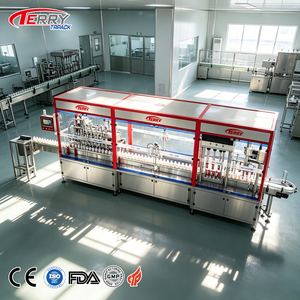
Equipped with servo-driven piston filling machines, automated hot-air ultrasonic tube sealers, precision induction cap tighteners, and visual inspection systems for sachets, glass droppers, soft-touch PE tubes, and gallon jugs.
On-Site Professional Testing Salon
Formulation performance is validated in our proprietary on-site testing salon. Licensed cosmetologists test shampoos, conditioners, and hair serums on real human hair swatches and clients, providing rapid, real-world feedback to our R&D chemists.
Comprehensive Analytical R&D Lab
Accelerated 90-day stability chambers (45°C, 75% RH), real-time photo-stability testing, freeze-thaw challenge cycles (-10°C to 40°C), and Brookfield viscometer rheology testing guarantee zero container-bulk incompatibility.
Rapid Prototype & Tooling Turnaround
Custom steel mold fabrication within 18–25 days, alongside 3D additive stereolithography (SLA) physical sampling within 72 hours, enabling cross-functional packaging teams to validate closures, neck threads, and hand feel before production runs.
Full Regulatory Export Support
Complete turnkey regulatory dossiers: Certificates of Analysis (COA), Safety Data Sheets (SDS), EU Cosmetic Product Safety Reports (CPSR), heavy metal testing, and U.S. MoCRA facility registrations delivered with every shipment.
Direct answers to technical, regulatory, and logistics questions commonly raised by procurement managers, packaging development engineers, and independent brand founders:
What are the minimum order quantities (MOQs) for custom packaging and formulation runs?
Our baseline production minimums depend on container format and tooling requirements:
Flexible Sachets (5–15 ml): 10,000 units per graphic run.
Luxury Skincare Glass & Droppers (10–50 ml): 2,500 units for standard stock colors; 5,000 units for custom Pantone spray coating or electroplating.
Extruded PE & Laminate Tubes (30–250 ml): 2,500 units for stock colors with silk-screen printing; 10,000 units for multi-layer EVOH co-extrusion.
Rigid HDPE / PET Bottles & Haircare Jars (100–1000 ml): 2,500 to 5,000 units.
Industrial Bulk / Salon Gallon Formats (128 oz): 480 units per run.
How do you verify chemical compatibility between custom primary packaging and active formulas?
We conduct accelerated compatibility and migration testing across our 90-day protocol. Filled primary packaging is placed in environmental chambers set at 45°C with 75% relative humidity (simulating two years of shelf life). We measure package deformation, environmental stress cracking (ESC), pump engine swelling, loss of volatile fragrance components via gas chromatography, and bulk discoloration to ensure product safety and integrity.
Can your facility accommodate both packaging fabrication and turnkey contract filling under one roof?
Yes. Our vertically integrated production model allows clients to source primary packaging from our precision injection, blowing, and extrusion tooling lines, and then fill their formulas directly via our 17 high-speed automated filling and labeling lines. This eliminates third-party freight costs, reduces secondary handling contamination risks, and accelerates lead times by 3 to 5 weeks.
What documentation do you provide for international customs clearance and regulatory filings (FDA MoCRA, EU CPNP)?
We furnish complete technical dossiers:
Certificates of Analysis (COA) covering physical tolerances, wall thickness, and thread dimensions.
Heavy Metal and Phthalate Screening Reports compliant with California Proposition 65, EU REACH (EC 1907/2006), and RoHS.
Full Formulation Safety Dossiers: USP <51> Antimicrobial Preservative Effectiveness, USP <61/62> Microbiological Examination, and Safety Data Sheets (SDS) authored to GHS standards for international freight and customs import compliance.
What are your tooling lead times for fully customized bottle, jar, or cap shapes?
Tooling development follows a structured milestone schedule: 3D CAD design review and mold-flow simulation within 48 to 72 hours; physical SLA resin functional prototypes within 3 to 4 days; pilot steel mold fabrication within 15 to 20 days; and final T1 sampling delivery for client sign-off within 25 days. Once approved, multi-cavity mass-production molds are operational within 30 to 35 calendar days.
How does your on-site testing salon improve formulation and packaging development?
Unlike manufacturers that rely solely on laboratory data, our built-in commercial-grade hair salon tests product ergonomics and real-world formula dispensing. Professional stylists evaluate pump actuation stroke force, nozzle clogging, spray plume angle, wet-comb detangling performance, and foam volume directly on diverse human hair profiles. These insights are shared directly with our on-site chemists and packaging engineers to optimize pump mechanics and product performance before high-volume commercial runs.
Ready to Scale Your Cosmetic Packaging & Manufacturing?
Consult with our senior technical packaging engineers, request physical component sample kits, or initiate rapid custom mold prototyping today.